Alumni Spotlight
Dr Hadi Khan MBBS Class of '06
How do you stay motivated and continue learning in your field, especially in a world that's constantly evolving?
We live in a world that is constantly evolving. New discoveries, technologies, and innovations are improving lives every day. However, good health remains one of the greatest blessings a person can have. Everyone aspires to live a healthy life, and I believe health is one of the greatest gifts bestowed upon us.
That is what keeps me motivated. In my field, particularly cancer surgery, knowledge is continuously advancing. New drugs are being developed, treatment protocols are changing, and our understanding of when patients benefit most from chemotherapy, radiation therapy, or surgery continues to evolve. These advancements are all aimed at improving survival outcomes and quality of life for patients.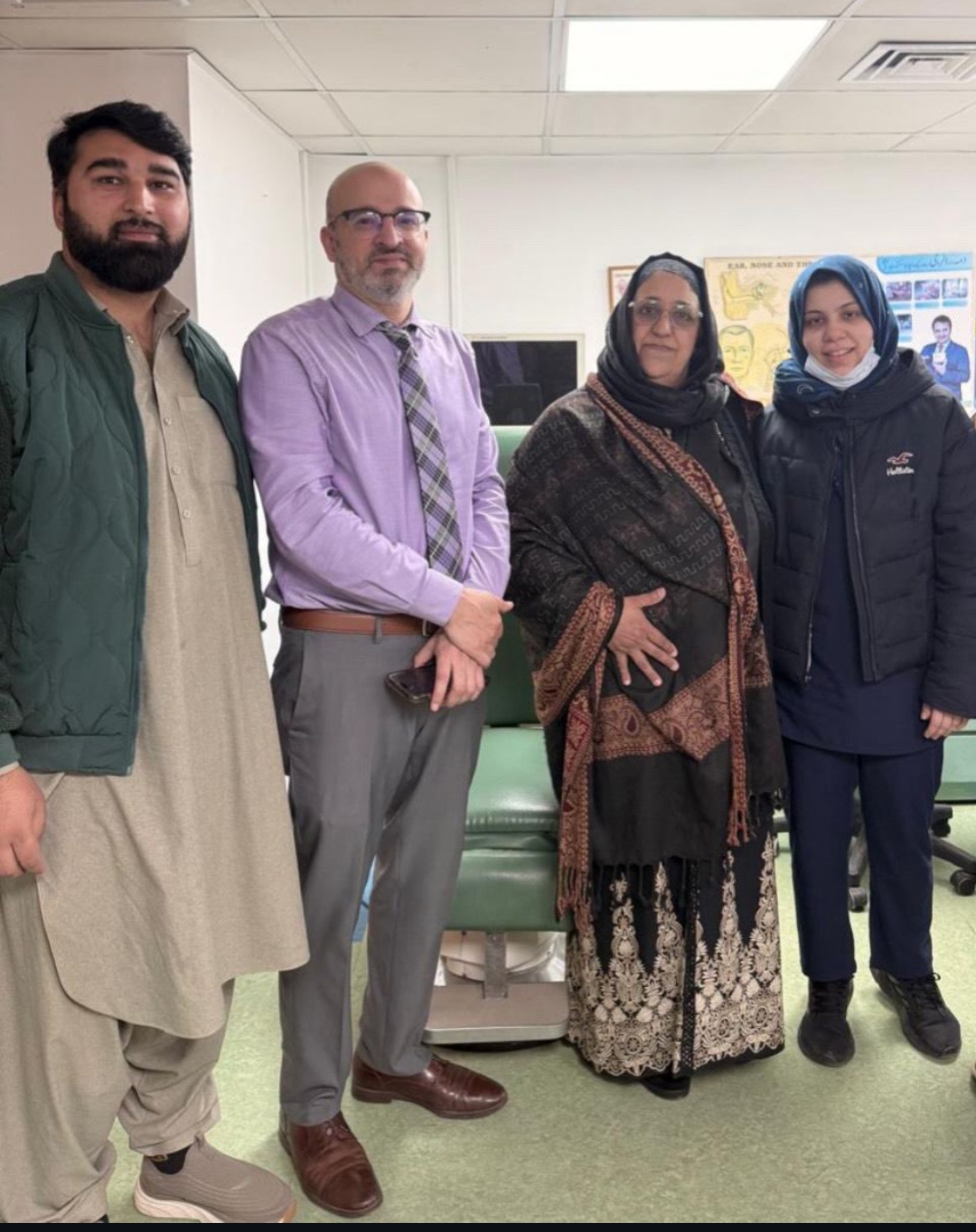
To provide the best possible care, I must remain committed to lifelong learning. Staying updated through reading, research, and continuous education enables me to offer my patients the most effective and evidence-based treatments available.
In your vast experience, what are the most pressing healthcare needs of the people of Pakistan? Where are we, as a healthcare community, doing well and where do we need more effort and investment?
One of the most pressing healthcare challenges in Pakistan is access. Quality healthcare services must be available to all, particularly to people living in underserved and rural areas. Strengthening primary healthcare is essential, and we need more well-trained primary care physicians and general practitioners who can focus on early intervention and disease prevention.
As a healthcare community, we must shift our focus from treating disease to preventing it. Prevention, early detection, and public health awareness can significantly reduce the burden of illness and improve overall health outcomes.
While Pakistan has a substantial number of doctors, there is a critical need for more allied health professionals, especially highly trained nurses and healthcare workers. These professionals play an indispensable role in patient care and often spend the most time supporting patients and their families. Compared to many developed countries, this remains an area where we need greater investment and attention.
Could you highlight some of your key research interests and any impactful projects you have worked on?
My primary research interests lie in clinical research, particularly in gastrointestinal malignancies. Over the years, I have been involved in numerous studies focusing on colorectal, esophageal, gastric, and pancreatic cancers, as well as sarcomas and sentinel lymph node research.
Our work has demonstrated that when evidence-based practices are implemented effectively, outcomes in Pakistan can be comparable to those reported in developed countries. In many cancers, we have achieved overall survival and disease-free survival rates that are encouragingly similar to international benchmarks.
One of the challenges we continue to face, however, is that many cancer patients in Pakistan present at a younger age and often with more advanced disease. This reinforces the importance of surveillance, early diagnosis, and preventive strategies. Once again, I would emphasize that prevention and early detection are just as important as treatment, if not more so.
What does an average day in your professional life look like?
Since my residency days, I have been accustomed to starting my day early. I typically begin work around 7:00 or 7:30 in the morning, allowing me to complete my responsibilities efficiently and maintain a healthy balance between work and personal life.
My mornings are usually dedicated to surgeries, while afternoons are spent in clinics seeing patients. Most days conclude around 6:30 in the evening.
The majority of my practice focuses on cancer care. I routinely manage patients with breast cancer, colorectal cancer, liver and pancreatic tumors, esophageal and gastric cancers, as well as sarcomas. Much of my time is spent evaluating patients who have undergone surgery, chemotherapy, or other treatments and determining how surgical intervention can further improve their outcomes and quality of life.
From your time at AKU, do you have a favorite moment, anecdote, or incident that is etched in your memory? How would you describe that journey?
My time at AKU remains one of the most memorable and cherished periods of my life. Even after nearly twenty years, I still reflect on those experiences almost every day.
It is difficult to identify a single favorite moment because there were so many meaningful ones. Some of my fondest memories involve life in the male hostel, spending time in the quad, and sharing experiences with friends and classmates who remain close to me to this day.
Whenever I see photographs of current medical students, I am transported back to my own student days. The friendships, the clinical rotations, the lessons learned, and even the mistakes I made and learned from are memories I continue to value deeply. Those experiences shaped me both personally and professionally, and they remain an important part of who I am today.
Looking back, what aspects of AKU's environment or values had the most lasting impact on your personal and professional development?
What had the most profound impact on me was AKU's overall environment of academic excellence, professionalism, and mentorship. The institution provided not only an outstanding education but also a culture that nurtured and transformed its students.
The faculty members and mentors invested tremendous effort in guiding, polishing, and shaping us into the professionals we are today. When I compare AKU graduates with many other medical graduates across the country, I see a distinct difference—not because we were inherently better students, but because of the environment in which we were trained.
AKU instilled in us the values of professionalism, ethics, discipline, compassion, and hard work. It taught us how to think critically, strive for excellence, and remain committed to lifelong learning.
Everything I have achieved in my career is rooted in the education, mentorship, and opportunities I received at AKU. There is no doubt in my mind that AKU played a defining role in shaping both my personal and professional journey.
Past Alumni Spotlight
- Dr Philomena Drago
- Dr Bashir Hanif
- Dr Sehreen Khan
- Dr Naila Bag Ansari
- Dr Muhammad Asim Khan
- Dr Azam Jan
- Dr Rahat Naz
- Dr Faysal Subhani
- Dr Alina Sadaf
- Dr Hamid Daud Naeem
- Muhammad Tahir Yousafzai
- Dr Sana Sheikh
- Dr Muhammad Yaser Hasan
- Dr Sabha Bhatti