Dr Salimah Walani
Advancing Health Equity through Advocacy and Partnerships
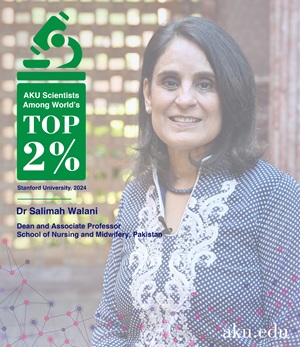 Dr Salimah Walani has worked for several years and with numeours organization to improve maternal and newborn health outcomes around the world. Her most impactful work has been in advancing the global birth defects agenda – impact that earned her a place among Stanford University's Top 2% most-cited scientists in 2024. Through her publications, she has advocated for integrating surveillance, prevention and care concepts in national and global policy to improve birth outcomes.
Today, as the Dean of the Aga Khan University School of Nursing and Midwifery, Pakistan (SONAM PK), Dr Walani brings together her international experience and partnership to focus on strengthening nursing and midwifery workforce in Pakistan and beyond. She is applying the lessons from her global health experience of over three decades to rethink nursing education as a vehicle for improving health equity and population health. She is now advocating for investments in strengthening nursing education, research and practice environments.
To address the shortage of nurses and midwives in Pakistan, she is working on institutional and policy reforms. Under her leadership, SONAM PK has deepened its research culture, created new programmes, and strengthened partnerships with health ministries, universities, and regulatory bodies. She has championed faculty development and is building a culture that prepares nurses and midwives to lead confidently on both national and international stages.
Evidence has always been the cornerstone of Dr Walani's work. She has authored widely cited knowledge products on maternal and newborn health disparities, preterm birth, and birth defects and the challenges facing low-and middle-income countries. Her scholarship has informed global guidelines, strengthened curricula, and inspired new approaches to advancing maternal and newborn care. Being listed as one of the world's Top 2% most-cited scientists by Stanford, reflects the broad and lasting influence of her work.
Yet the true measure of Dr Walani's impact is reflected in the people she inspires now – students and faculty of SONAM, PK. Her mentorship is grounded in an unshakeable belief in the profession's potential to improve population health outcomes. Colleagues and students alike describe her as a visionary leader—someone who connects policy with practice, translates evidence into action, and leads fearlessly. Whether speaking to global health leaders or guiding students individually, her message stays the same: well-educated and confident nurses and midwives supported by strong healthcare systems are essential to healthier, more equitable societies.