Professor John H. (Jack) Bryant, MD, 1925–2017
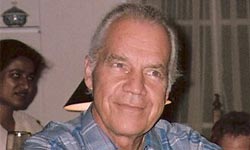 John H. Bryant, born in 1925 in Arizona, served as a Navy pilot in World War II, completed undergraduate studies at the University of Arizona, and then earned his MD at the Columbia University College of Physicians and Surgeons in 1953. He completed his residency in medicine at Presbyterian Hospital in New York City, a postgraduate research position from the National Institutes of Health, and fellowships in biochemistry at the National Institute of Arthritis and Metabolic Diseases and at the Max Planck Institute for Biochemistry in Munich, and finally a fellowship in hematology at Washington University in St. Louis, Missouri.
Following his deep interest in international health, he became the lead person for the study culminating in the classic book in public health “Health and the Developing World".
He then became the Director of the School of Public Health at Columbia and led the US delegation to the International Conference on Primary Care in Alma Ata, which resulted in the well-known “Health for all by the year 2000." The phrases 'care according to need,' 'social justice,' 'community participation,' 'and health for all,' became a byword.
He represented the U.S. government on the executive board of the World Health Organization (WHO).
Dr John H Bryant was the Chair of the Department of Community Health Sciences at the new Aga Khan University in Karachi, Pakistan in (1985 – 1993). Jack Bryant participated in developing a model curriculum based on the community health planning cycle within each of the five years of medical school, representing 20% of the undergraduate curriculum.
The real teaching and learning were in the 'katchi abadis,' the squatter settlements of Karachi, where medical students were a part of the team with nursing students, community health workers, community nurses and physicians—along with the community leaders and people living in the areas - to assess, plan, implement, and evaluate how to improve health locally.
At Baba Island, in Karachi's harbor, infant mortality exceeded 200 per 1000 live births. “The people in these settlements tell us that their children are sick before they are born." The community leaders belonged to the Baba Fisherman's Welfare Association, who were illiterate and doubted their self-worth. Jack Bryant highlighted what they knew and how to use the same ability and knowledge to improve community's health needs.
While at AKU in Karachi, Jack Bryant started a role play series conducted in the Lecture Halls, as part of the teaching/learning process, which were called the “Bryant's Game." In this game, each student played the role of a patient, a mother / family member, a community health worker, nurse and physician.
Jack Bryant was awarded AKU Emeritus Professorship in 1994.
Dr Bryant went to work in Kenya around 2000, and with Nancy Bryant, his wife, established a new organization—the Orphans and Vulnerable Children's Project in the Urban Slums of Africa exploring approaches to support early child development in these challenging informal communities.
John Bryant worked as a Senior Researcher and later a Foreign Expert at the Institute for Population and Social Research, Mahidol University in Bangkok, Thailand, from 2005 to 2008.
Source: AJPH November 2027. 101(11):1747-9.