Cardiovascular disease (CVD) has long been the world's leading cause of death. But a new review article published in Current Cardiology Reports warns that the global burden of heart disease could rise dramatically over the next 25 years, driven not only by lifestyle risks but also by powerful demographic shifts.
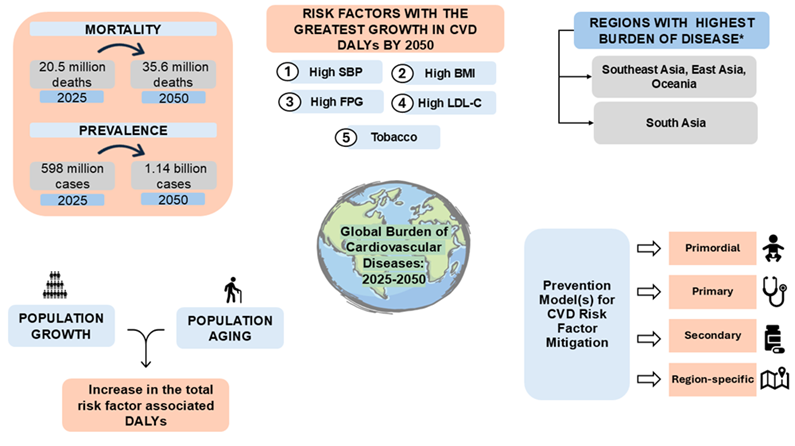
The article, Global Burden of Cardiovascular Disease: What Should Be Expected in the Next 25 Years?, authored by an international team of researchers including Aga Khan University (AKU) scientists, projects that the number of people living with CVD will nearly double by 2050. Global cases are expected to rise from an estimated 598 million in 2025 to 1.14 billion by mid-century. During the same period, annual deaths from cardiovascular disease could increase from 20.5 million to 35.6 million.
The findings highlight a striking paradox. While the risk of dying from heart disease for an individual may decline due to better treatments and prevention, the total number of deaths will continue to climb especially in low- and middle-income countries. Two major demographic forces explain this trend: rapid population growth and a steadily aging global population.
“The world is making real progress in improving cardiovascular care and prevention," explains Dr Salim S. Virani, Professor of Cardiology and Population Health at AKU and senior author of the study. “But these gains are being outpaced by obesity, diabetes, population growth and aging. Even if the risk per person falls, many more people are living long enough to develop cardiovascular disease. Finally, the progress is and will continue to be uneven with high-income countries seeing disproportionate gains compared with low-income countries."
The study also identifies the key drivers of future heart disease. High blood pressure is expected to remain the leading cause of cardiovascular deaths worldwide, while high cholesterol, obesity, and diabetes will play increasingly significant roles. Obesity and diabetes are projected to grow at the fastest rates, fuelled by dietary changes, urbanisation, and increasingly sedentary lifestyles.
The burden will not be shared equally across the globe. Low- and middle-income countries are expected to experience the steepest rise in cardiovascular disease, with South Asia, East Asia, and Southeast Asia accounting for a large share of future deaths. Many of these regions face a 'double burden': rapidly increasing risk factors alongside health systems that are still building capacity to respond.
Despite the alarming projections, the authors emphasise that the future is not predetermined. Proven prevention strategies—from healthier diets and tobacco control to early screening and community-based blood pressure programmes—could significantly alter the trajectory of cardiovascular disease.
“The tools to prevent much of this burden already exist," says Dr Virani. “The challenge now is implementing these solutions at scale so that prevention reaches people early and equitably across the world."
As governments and health systems plan for the decades ahead, the study underscores a critical message: addressing cardiovascular risk today will shape the global heart health landscape of tomorrow.